VS
At a Glance
Power
338 kW
258kW@6000
Torque
660 Nm
530Nm@2800
Fuel
1.6 when hybrid battery charged l/100km
14.9L/100km
Towing
3000 Kg
3500kg
0-100 km/h
5.7 (5.5 with Dynamic Launch engaged) s
6.1s
Engine
2997 cc
5461cc
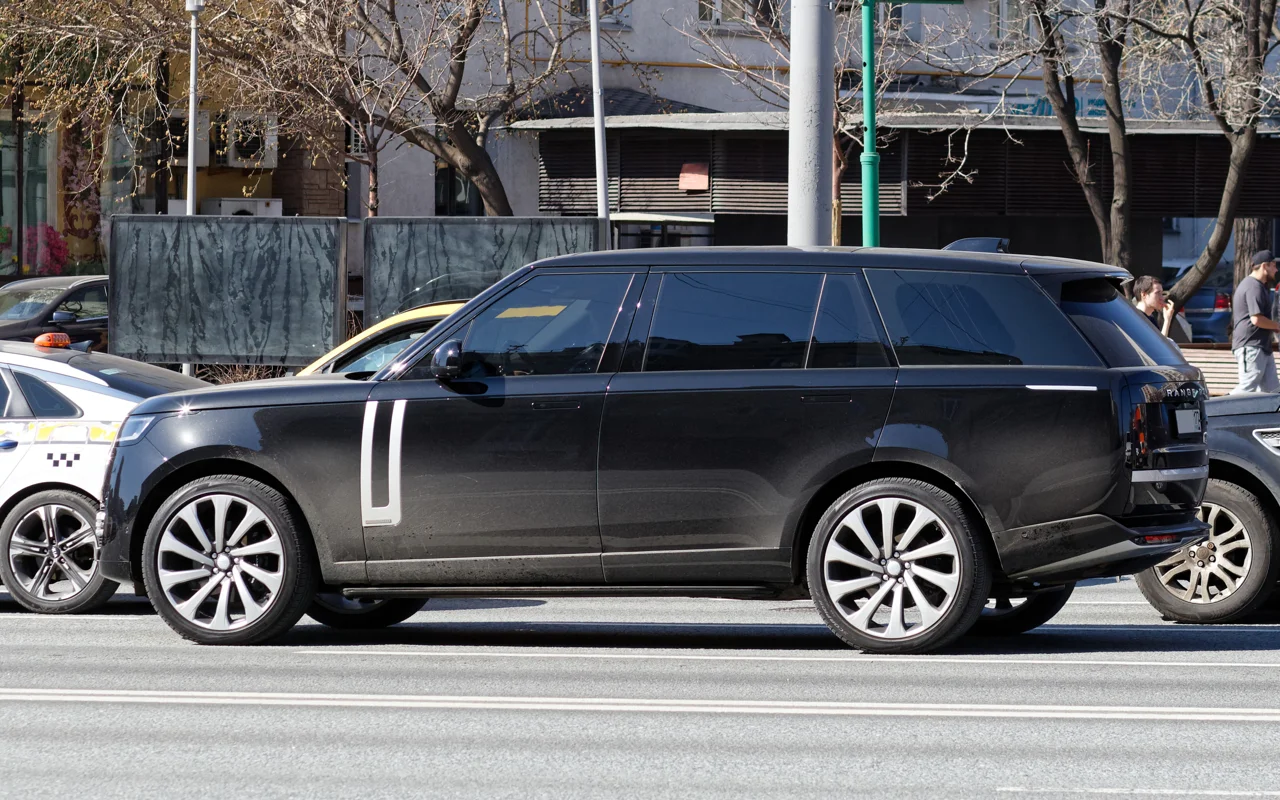
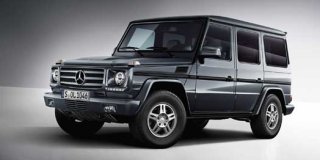
Choosing between the Land Rover Range Rover and the Mercedes-Benz G-Class is one of the most common decisions car buyers in South Africa face. The Land Rover Range Rover delivers 338 kW while the Mercedes-Benz G-Class produces 258kW@6000. On fuel, the Range Rover returns 1.6 when hybrid battery charged l/100km while the G-Class uses 14.9L/100km — important in a market where fuel prices change monthly. Pricing starts at R3 975 100 for the Range Rover and R1 494 000 for the G-Class. Both vehicles have their merits. The right choice depends on your priorities: fuel economy, performance, towing ability, safety features or total cost of ownership. This comparison covers every specification available so you can make an informed decision.
Specification
Land Rover Range Rover3.0 PHEV Autobio (p460e) 2026 - From R3 975 100
Mercedes-Benz G-Class500 7g-Tronic 2012 - From R1 494 000
Performance
Power Output
338 kW
258kW@6000
Torque
660 Nm
530Nm@2800
0-100 kph
5.7 (5.5 with Dynamic Launch engaged) s
6.1s
Top Speed
225 Km/h
210km/h
Engine & Drivetrain
Engine Capacity
2997 cc
5461cc
Engine Layout
inline
LONGITUDINAL V 8
Cylinders
6
8
Fuel Type
petrol-electric hybrid
UNLEADED
Forced Induction Device
turbocharger
—
Transmission
automatic
AUTOMATIC
Number of Gears
8
7
Drive Wheels
all
ALL
Full Time 4x4
✓ Standard
✓ Standard
Low Range
✓ Standard
✗
Fuel Economy
Fuel Consumption Average
1.6 when hybrid battery charged l/100km
14.9L/100km
Fuel Consumption Urban
—
-
Fuel Consumption Highway
—
-
Fuel Tank Capacity
72 l
96L
CO2 Emissions
38 when hybrid battery charged g/km
348g/km
Dimensions
Length
5052 mm
4662mm
Width
2047-2209 mm
1760-2007mm
Height
1870 mm
1951mm
Wheelbase
2997 mm
2850mm
Ground Clearance
209-284 mm
205mm
Kerb Weight
2695 DIN / 2770 EU Kg
2530kg
Doors
5
5
Seats
5
5
Load Volume
1050-2335 l
—
Towing & Payload
Towing Capacity
3000 Kg
3500kg
Load Capacity
—
2250kg
Safety
ABS
✓ Standard
✓ Standard
EBD
✓ Standard
✓ Standard
Brake Assist
✓ Standard
—
Stability Control
✓ Standard
ESP
Traction Control
✓ Standard
✓ Standard
Airbag Count
6
2
Driver Airbag
✓ Standard
✓ Standard
Passenger Airbag
✓ Standard
✓ Standard
Side Airbags Front
✓ Standard
✗
Curtain Airbags
✓ Standard
✗
Features & Tech
Air Conditioning
✓ Standard
✓ Standard
Climate Control
✓ Standard
✓ Standard
Cruise Control
✓ Standard
✓ Standard
Adaptive Cruise Control
✓ Standard
✓ Standard
Bluetooth
✓ Standard
✓ Standard
Satellite Navigation
✓ Standard
✓ Standard
Reversing Camera
✓ Standard
—
Park Distance Rear
✓ Standard
✓ Standard
Park Distance Front
✓ Standard
✗
Sunroof
Optional
Optional
Heated Seats
✓ Standard
BOTH FRONT
Electric Seat Adjustment
—
✓ Standard
Keyless Entry
Optional
✗
Tow Bar
✓ Standard
—
Alloy Wheels
✓ Standard
✓ Standard
Warranty & Service
Warranty Period
5 vehicle / 8 hybrid battery
24
Warranty Distance
100000 Km
-
Service Plan
—
M
Service Intervals
—
15000
The Verdict
Which Wins?
Overall Winner
Tie
2 / 4 categories
Performance
Range Rover
Fuel Economy
Range Rover
Value
G-Class
Practicality
G-Class
Pros & Cons
Land Rover Range Rover
Better fuel economy (1.6 when hybrid battery charged l/100km)
Higher starting price
Mercedes-Benz G-Class
Lower starting price (R1 494 000)
Higher towing capacity (3500kg)
Higher fuel consumption (14.9L/100km)
Frequently Asked Questions
Which is more fuel efficient, the Range Rover or G-Class?
The Range Rover uses 1.6 when hybrid battery charged l/100km and the G-Class uses 14.9L/100km on the combined cycle. The Range Rover is the more fuel-efficient choice. In real-world conditions with a mix of highway and urban driving, actual figures will be slightly higher.
Which has more power, the Range Rover or G-Class?
The Range Rover produces 338 kW and 660 Nm of torque while the G-Class delivers 258kW@6000 and 530Nm@2800 of torque. The Range Rover is the more powerful option.
What is the price difference between the Range Rover and G-Class?
The Range Rover starts from R3 975 100 and the G-Class from R1 494 000. The G-Class is cheaper by R2 481 100 at this variant level. Final on-the-road pricing varies by dealer and specification.
Which has a higher towing capacity, the Range Rover or G-Class?
The Range Rover has a braked towing capacity of 3000 Kg and the G-Class can tow 3500kg. Always verify towing limits in the owner's manual before hitching a trailer.
Should I buy the Range Rover or the G-Class?
It depends on your priorities. If fuel economy matters most, check the L/100km figures above. If you need towing capacity, compare the towing ratings. For day-to-day South African driving - load shedding runs, potholed roads, school runs and highway commutes - consider ground clearance, service network coverage, and total cost of ownership including insurance and maintenance. Use the spec tables above to compare every detail before making your decision.
Also Consider